DIY AC REPAIR
Stop handing your HVAC tech a $300–$1,000 check for a job you could do yourself in 30 minutes. Get the exact diagnostic system a licensed tech uses — without the license.
YES — I Want to Fix My Own AC →Instant digital access · 164 guides included · Works on any device
🔥 Average AC service call in 2025: $350–$900. The capacitor they replaced? $12 on Amazon. The guide to do it yourself? You're looking at it.
HVAC Companies Count on Your Confusion
WITHOUT These Guides
- You call a tech, pay a $100+ "diagnostic fee" just for them to show up
- They tell you it's a "bad capacitor" — charge you $400 to swap a $15 part
- You have no idea if the problem is real or if you're being upsold
- You wait 2–4 days in summer heat for an appointment
- You can't find your unit's manual or wiring diagram online
- Every Google result is generic and doesn't match your specific model
- You feel helpless every time your AC acts up
WITH These Guides
- Pull up your exact unit's guide in 60 seconds
- Follow step-by-step diagnostic steps written by a real HVAC tech
- Know exactly which part is bad before you spend a dime
- Order the right part on Amazon and have it tomorrow
- Fix most common problems yourself in under an hour
- Know when it's safe to DIY vs. when to call a tech
- Never get overcharged again because you know too much
Your Complete DIY Arsenal
This isn't a generic YouTube tutorial. These are professionally written, model-specific guides organized exactly like the binders a real HVAC tech carries in their truck.
Find Your Exact Unit Model
- RA14 · RA16 · RA17 · RA18
- Classic & Prestige Series
- Air Conditioners & Heat Pumps
- 13–20 SEER · 1.5–5 Ton
- 24ACA · 24ACC · 24ACB
- Comfort & Performance Series
- Single & Two-Stage Systems
- 13–21 SEER · 1.5–5 Ton
- 4TTR3 · 4TTR4 · 4TTR6
- XR & XL Series
- R-410A & R-22 Systems
- 13–21 SEER · 1.5–5 Ton
- 13ACX · 14ACX · XC13 · XC21
- Merit, Elite & Dave Lennox
- Most complete brand coverage
- 13–26 SEER · 1.5–5 Ton
- GSX13 · GSX14 · GSX16 · GSX18
- DSXC · DSZC · GSXC
- Budget to Premium Lines
- 13–19 SEER · 1.5–5 Ton
- ASX13 · ASX14 · ASXC18
- R-410A Systems
- 2006–Present
- 13–19 SEER · 1.5–5 Ton
- DX13SA · DX14SN · DX16SA
- Mini Split Systems Included
- 2012–Present
- 13–18 SEER · 1.5–5 Ton
- York Latitude & Affinity Series
- Bosch IDS & Inverter Systems
- AirTemp N4H3 · SCU · VCA
- 2005–Present Coverage
Every Guide Is Built the Same Way
No fluff. No filler. Every guide is structured like a real HVAC tech's troubleshooting checklist so you can work through it step-by-step and actually solve the problem.
SAFETY FIRST
Clear warnings about 240V electrical hazards, capacitor discharge, and what tasks legally require a licensed tech. You'll know exactly what's safe before you touch anything.
KNOW YOUR SYSTEM
Full spec sheet for your exact model — SEER rating, tonnage range, refrigerant type, normal operating pressures, and whether your unit has a heat pump, reversing valve, or LED diagnostic board.
TOOLS YOU'LL NEED
Exact tools listed for your specific repair — with Amazon links so you can order the right thing in one click. No guessing what size screwdriver or which capacitor rating to buy.
12 DIAGNOSTIC STEPS
Step 1 through Step 12 — each step eliminates one possible cause. Check the thermostat, filter, breaker, capacitor, contactor, outdoor fan, compressor, and refrigerant pressures in order.
LED ERROR CODES
For units with diagnostic boards, the guide decodes every flash code pattern so you know exactly what the system is telling you — no squinting at a faded label on the inside of the panel.
SYMPTOM LOOKUP TABLE
Start from your symptom — "fan runs but no cold air," "unit won't turn on," "ice on the coil," "loud banging noise" — and jump straight to the likely cause and fix.
PRESSURE QUICK REFERENCE
Normal suction and head pressures for R-410A and R-22 at various outdoor temps. Compare your gauges to the chart and know if your refrigerant charge is correct.
MAINTENANCE SCHEDULE
Monthly, seasonal, and annual maintenance checklist specific to your unit — so you can prevent the next breakdown before it happens instead of waiting for it to fail in the middle of August.
The Tools You'll Actually Need
Most repairs only need 2–3 tools you might already own. Every guide tells you exactly what you need for that specific repair. Here's the complete toolkit recommended by a licensed HVAC tech — every item linked directly to Amazon.
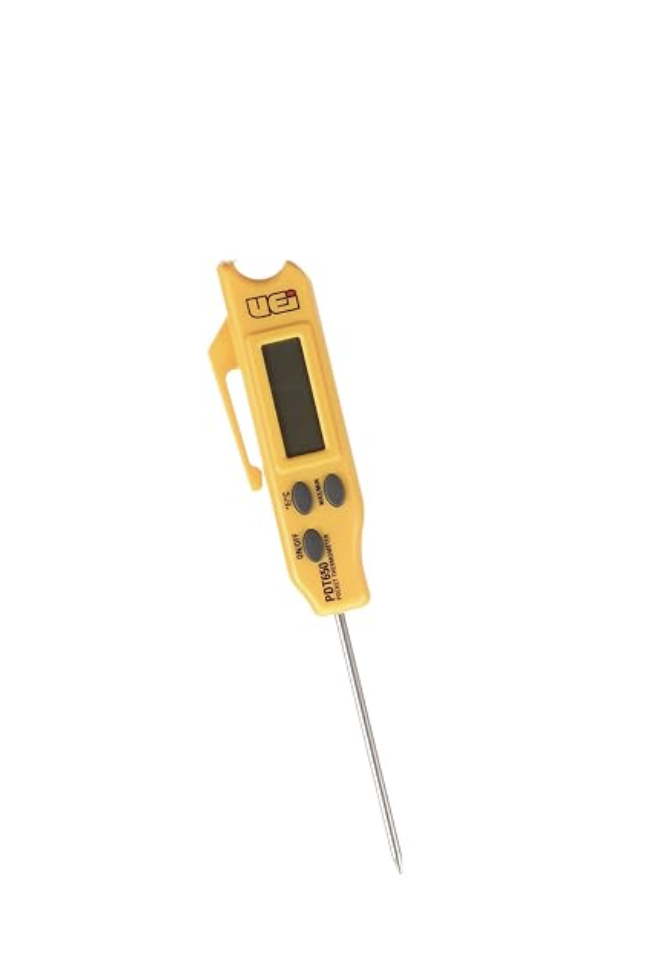
Pocket Digital Thermometer
Stick the probe into the supply and return air registers to measure your Delta-T (temperature difference). A working system should show 18–22°F of cooling. Under 14°F? Something is wrong. This is Step 1 of every airflow check in the guides.
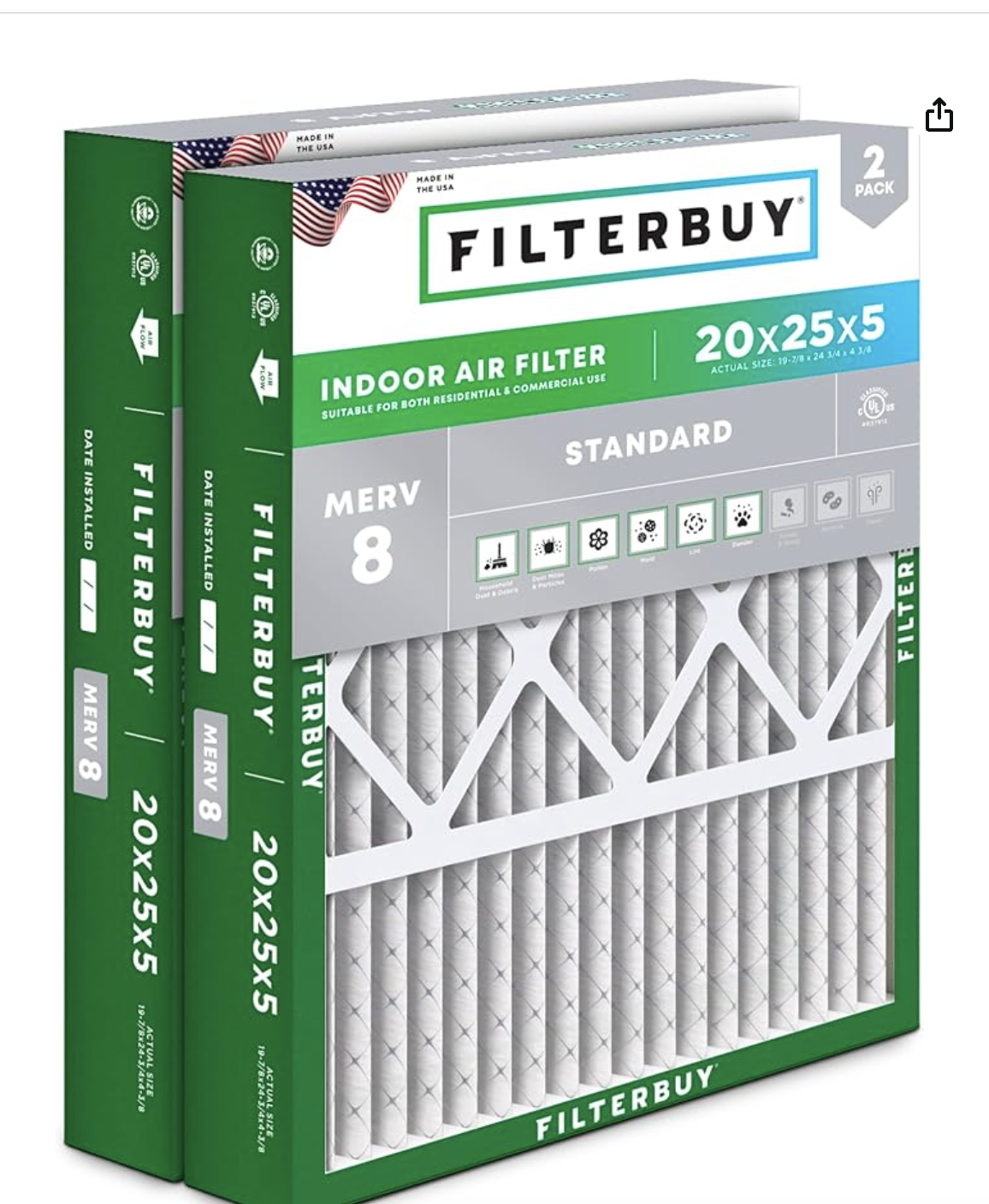
20x25x5 MERV 8 Filter (2-Pack)
A clogged filter is the #1 DIY fix — and it's free if you already have one. Restricted airflow freezes your evaporator coil solid. Every guide checks this in Step 3 before anything else. FilterBuy's MERV 8 fits Trion Air Bear and Carrier media cabinets and lasts up to a year.
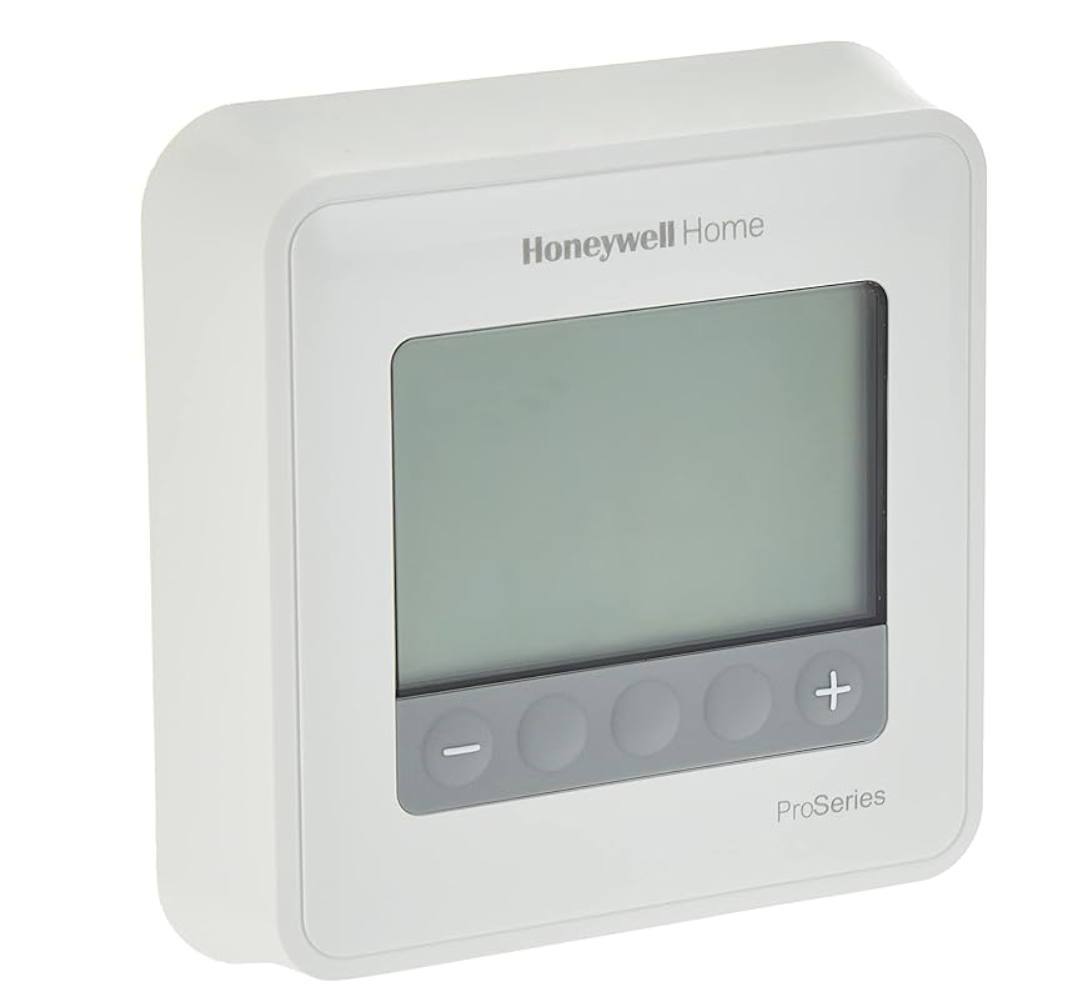
Honeywell Home Thermostat
Failing thermostats cause more "AC not working" calls than almost anything else. They lose calibration, develop bad contacts, or simply die. Your guides walk you through testing the thermostat in Step 2 before you ever touch the outdoor unit. Replacing it yourself costs $30–$60.
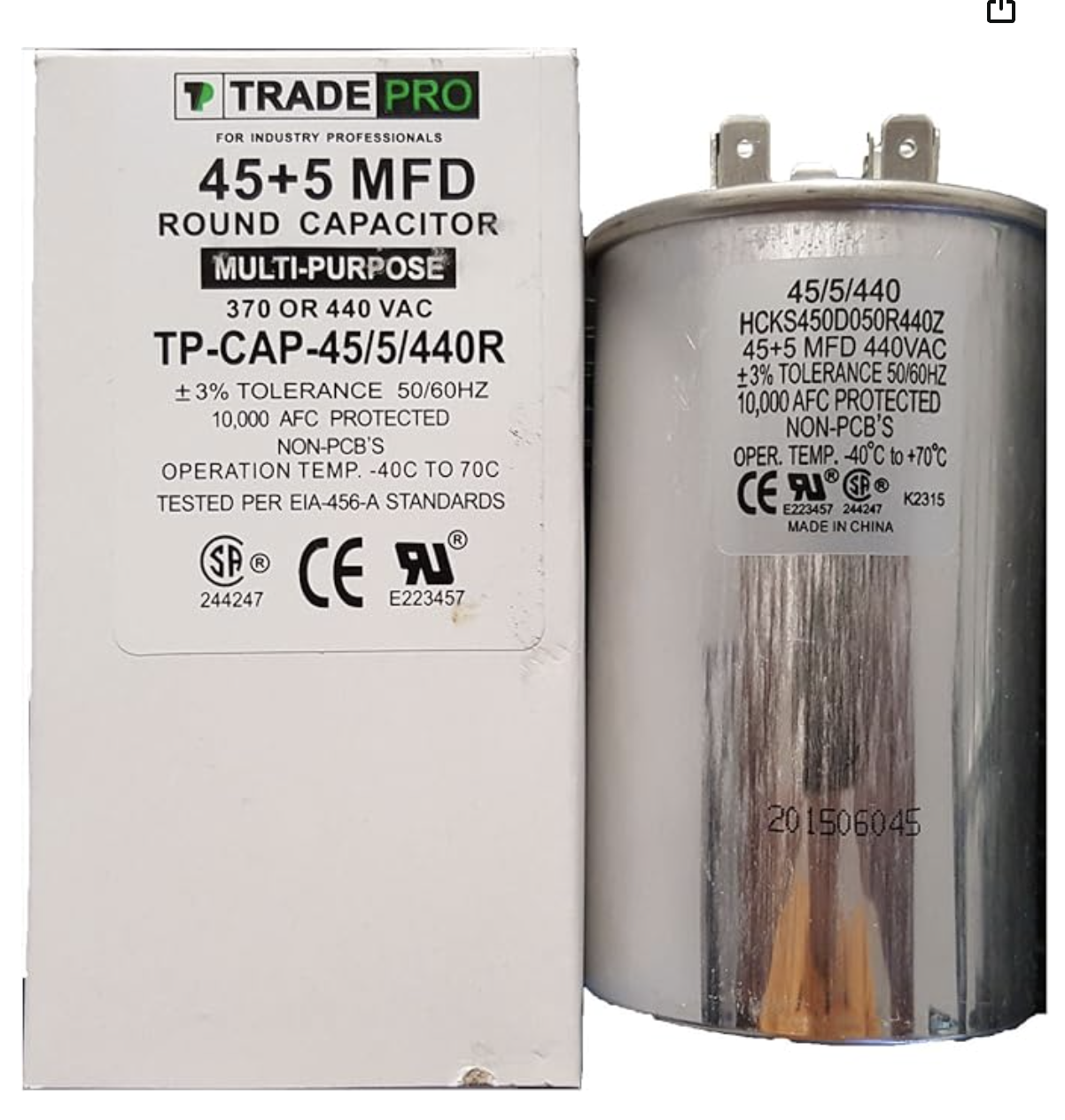
Dual Run Capacitor (45/5 · 40/5 · 35/5 · 50/5)
The single most common AC repair. When your outdoor fan spins but the compressor won't start — or vice versa — a dead capacitor is almost always why. Techs charge $250–$450 to swap a $12–18 part. Your guide tells you the exact MFD rating for your unit before you order.
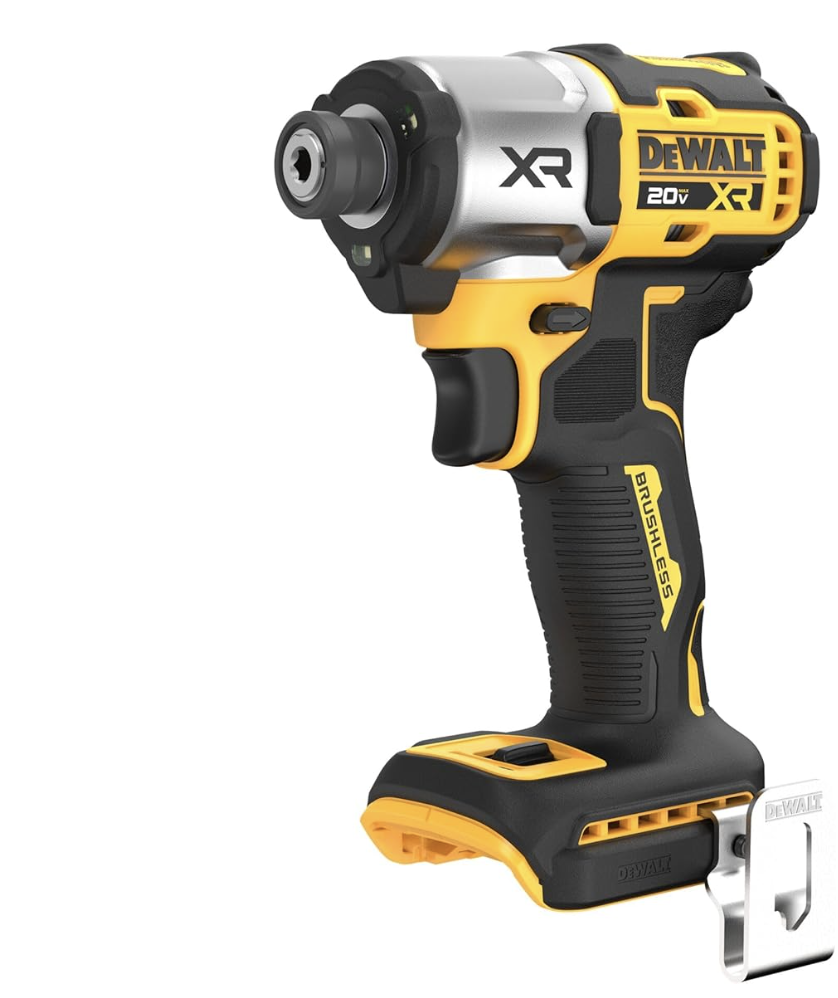
DeWalt 20V XR Impact Driver
Removes access panels, fan motor brackets, and contactor mounting screws fast. Most outdoor unit panels use 5/16" hex-head screws — an impact driver makes this effortless compared to a hand screwdriver. If you already own DeWalt 20V batteries, this tool pays for itself on the first repair.
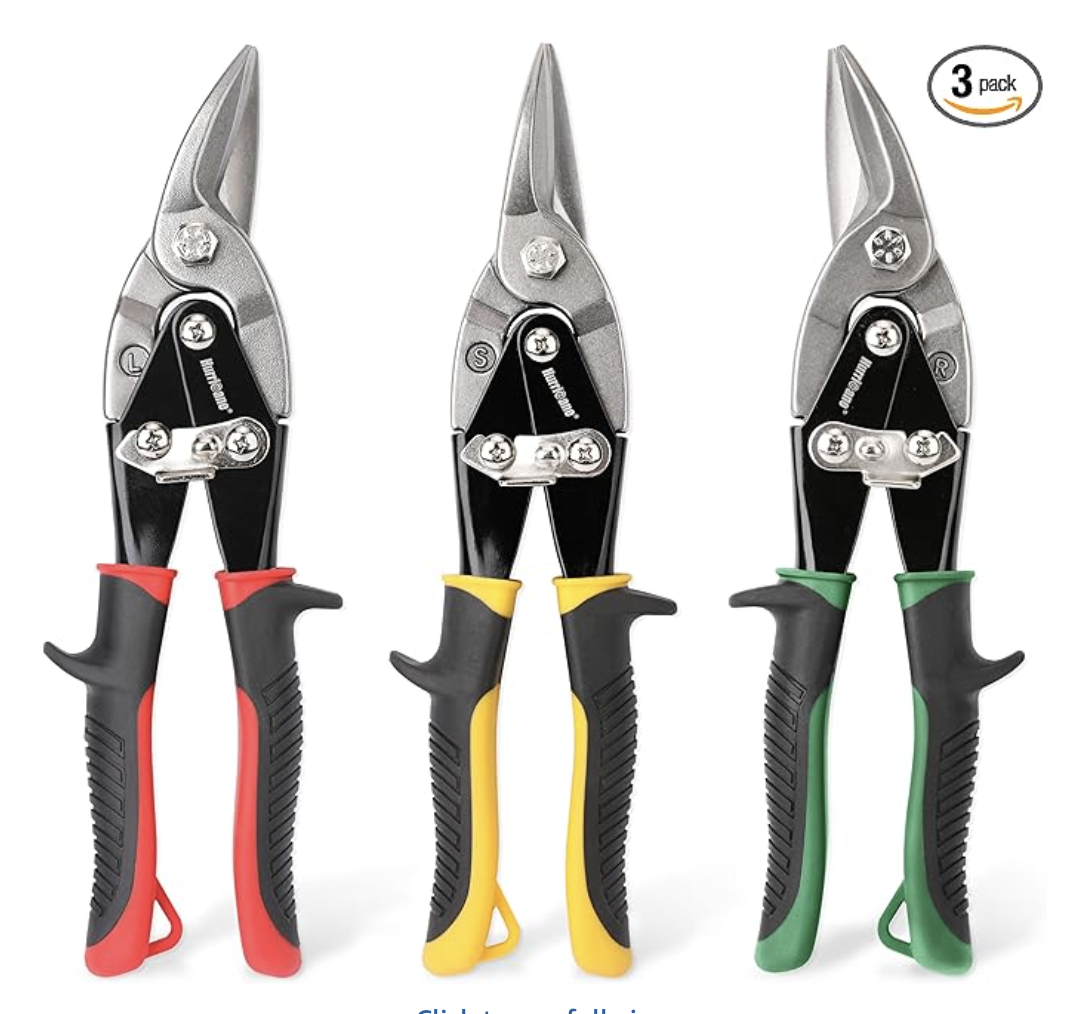
Aviation Tin Snips (3-Pack)
Needed any time you're trimming sheet metal on a duct connection, cutting flex duct, or working around a drain pan. The 3-pack (left, straight, right) covers every cut direction. Guides that involve duct work or coil access will call these out specifically.
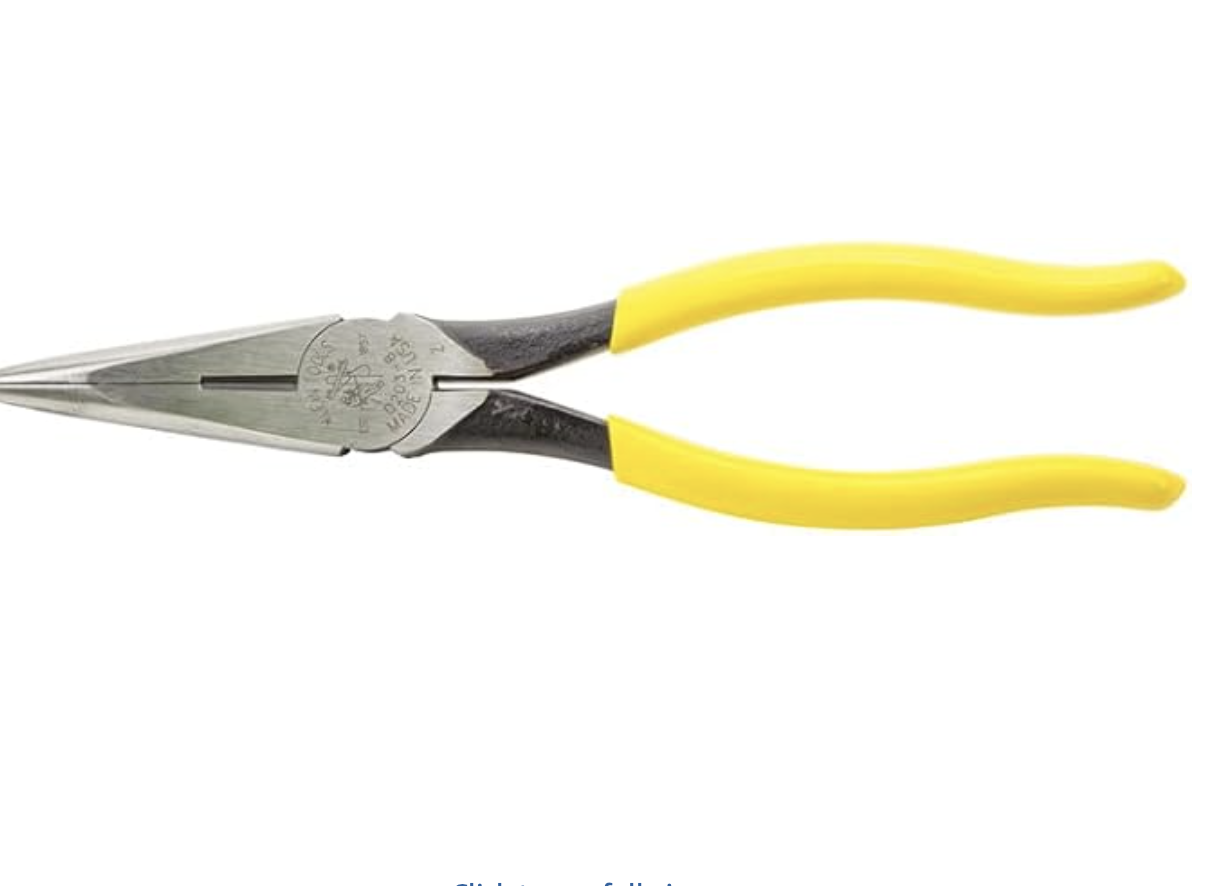
Needle Nose Pliers
Essential for pulling capacitor terminals, reaching wires in tight control boxes, and repositioning small connectors without snapping them. Klein Tools are the standard in HVAC — the coated handles prevent accidental short circuits when working near live terminals.
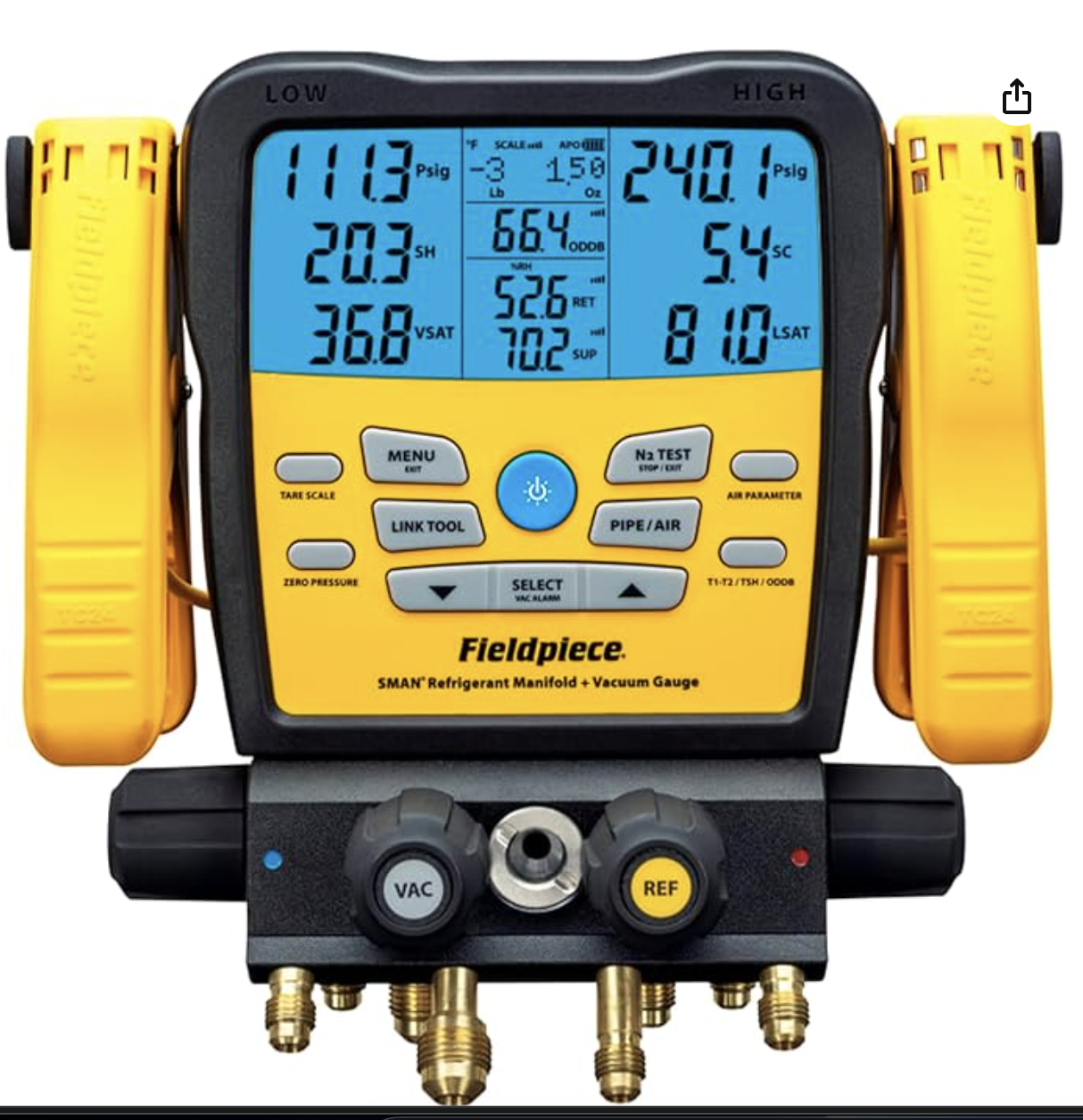
Fieldpiece SMAN Digital Gauge Set
The professional-grade tool for reading refrigerant pressures, superheat, and subcooling — all at once. Used in Step 10 of the guides to diagnose low refrigerant, restrictions, or a failing compressor. The SMAN calculates everything for you so you're not doing the math in your head on a hot roof.
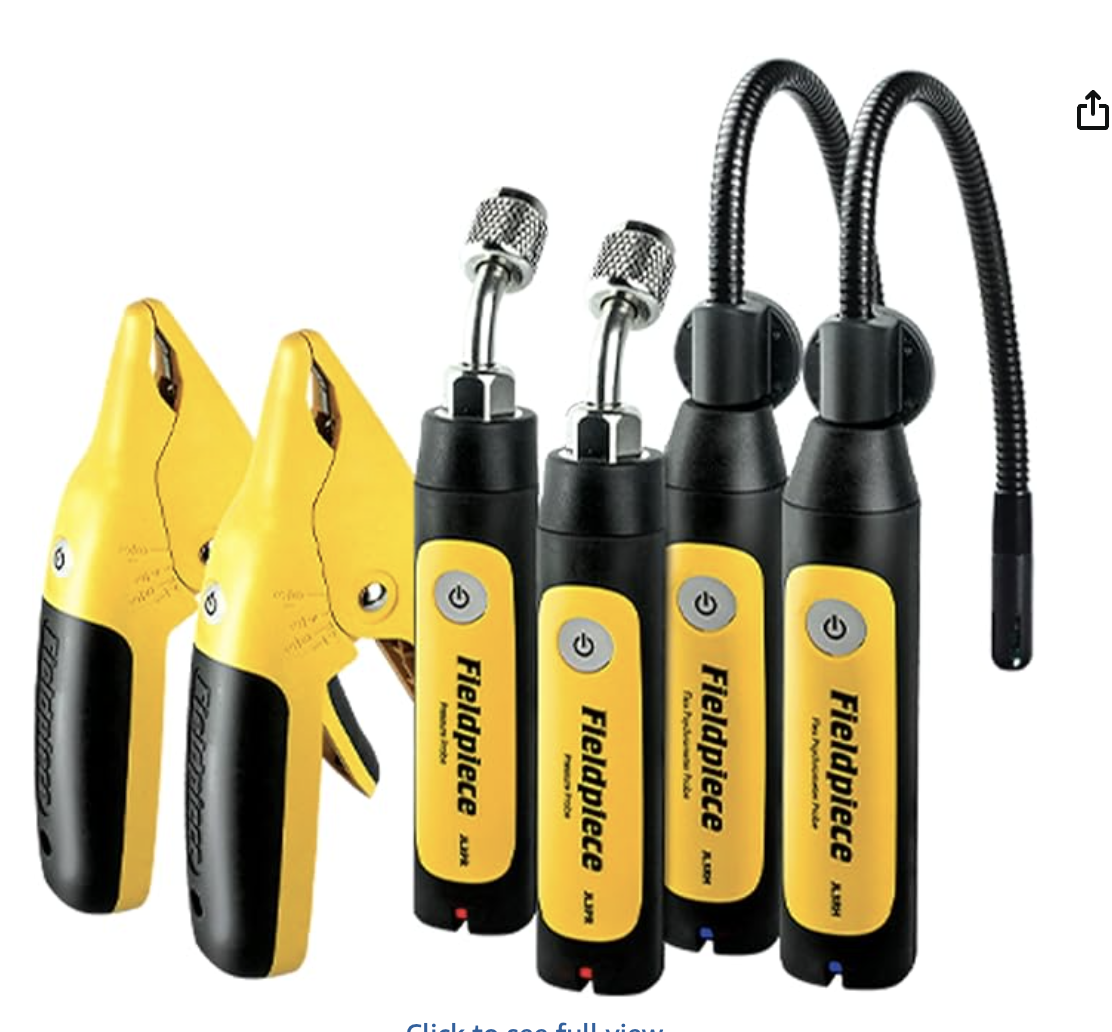
Fieldpiece Probe & Accessory Kit
The full Fieldpiece accessory system — pressure probes, temp clamps, and leak detection heads that pair with the SMAN gauge. When your guides call for measuring pipe temps or checking for refrigerant leaks, this kit handles it. The pro-level setup for serious DIY HVAC diagnosis.

Control Fuses (3A & 5A)
A blown fuse is one of the most common reasons a system appears completely dead — no thermostat response, no outdoor unit, nothing. Your guides check this in Step 5 before touching anything else. These are cheap, fast to replace, and the fix you never expected. Keep a pack of both ratings on hand.
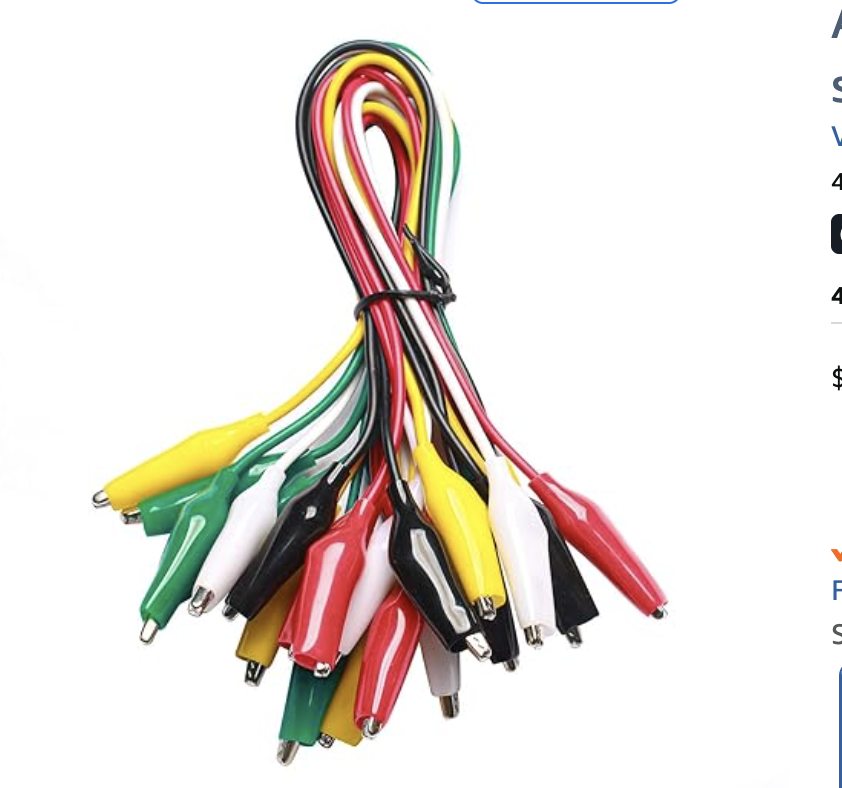
Alligator Test Clips
Small but essential. Used to jump thermostat wires and test 24V control circuits hands-free. When your guide says to bridge the R and Y terminals to test whether the outdoor unit responds, these clips hold the connection steady so you can watch what happens without holding probes in place the whole time.
Every guide in the bundle tells you specifically which tools apply to your repair — you won't need all of these. Most fixes only need 2–3 items you might already own.
Homeowners Are Saving Thousands
"My AC stopped blowing cold on a Saturday. Tech wanted $450 to come out Sunday with an emergency fee. Pulled up the Goodman GSX16 guide, tested the capacitor with my multimeter, it was dead. $14 capacitor from Amazon, watched step 6 in the guide, fixed it myself by Sunday afternoon. $436 saved."
"I have a Carrier 24ACC6 and couldn't find anything online that was specific to my unit. This guide had my exact model, the wiring diagram, the error code chart — everything. Turned out to be a dirty filter causing the coil to freeze. Free fix. The guide is worth it just for the peace of mind knowing what to look at first."
"My Trane XR14 wasn't heating right in winter. Guide walked me through the heat pump diagnostic steps — defrost relay was stuck. The guide even had the LED flash code chart that told me exactly what the board was trying to say. Bought the part for $22, had heat back in 45 minutes. Called the tech company back to cancel."
Perfect For People Like These
THE HOMEOWNER
You own your home and hate paying $400+ every time something goes wrong with your AC. You're not afraid to get your hands dirty — you just need to know exactly what you're doing before you touch anything.
THE LANDLORD
You have multiple properties and AC calls are bleeding your margins. Being able to diagnose (and sometimes fix) the problem yourself before dispatching a tech saves you hundreds per unit per season.
THE DIY'ER
You've fixed your own plumbing, electrical, and appliances before. HVAC just felt too technical without a roadmap. These guides are the roadmap — specific, step-by-step, and written so you actually understand why each step matters.
THE SKEPTIC
You've been burned by tech overcharging before and want to at least know what they're talking about. Even if you end up calling a tech, knowing what the problem is means you can't be oversold a $2,000 fix for a $15 capacitor.
One Price. 164 Guides. Forever.
No subscription. No upsell. No "basic plan." You get everything, right now, for a one-time price that pays for itself the first time you use it.
DIY AC REPAIR
COMPLETE BUNDLE
164 Brand-Specific Diagnostic Guides + Full Tool Reference
One-time payment · Instant access · Never expires
- 164 brand-specific AC diagnostic guides (PDF format)
- Covers Rheem, Carrier, Trane, Lennox, Goodman, Amana, Daikin, AirTemp, York & Bosch
- Systems from 2005 through present
- 12-step diagnostic process for every guide
- LED error code charts for all compatible units
- Symptom lookup tables — start from your problem
- Refrigerant pressure quick reference for R-410A & R-22
- Preventive maintenance schedules
- Amazon tool links in every guide
- Written by a licensed HVAC tech (EPA 608 certified)
- Instant digital download — access on phone, tablet, or computer
🔒 Secure checkout · Instant access after purchase · Works on any device
You Probably Want to Know This
Your AC Will Break Again.
Will You Be Ready?
Summer is coming. $97 now vs. $400–$900 when your unit goes down in August heat. The guides pay for themselves the first time you use them.
🔒 Secure checkout via Whop · Instant access · Covers 10 brands · 2005–Present
IMPORTANT — Please Read Before Purchasing
The guides provided by DIY AC Repair are for educational and informational purposes only. By completing your purchase, you acknowledge and agree to the following:
- You are solely responsible for any actions you take on your HVAC system, including but not limited to repairs, replacements, adjustments, and diagnostic procedures.
- DIY AC Repair, its creators, contributors, and affiliates are not liable for any personal injury, property damage, equipment damage, system failure, or financial loss resulting from the use or misuse of information contained in these guides.
- Refrigerant work (adding, recovering, or handling refrigerants) requires an EPA Section 608 certification and must only be performed by a licensed technician. Attempting refrigerant work without certification is illegal and dangerous.
- Always turn off power at the breaker and outdoor disconnect before performing any hands-on work. Capacitors store lethal voltage even after power is removed — wait 5 minutes and discharge safely.
- These guides are a supplement to professional knowledge — not a replacement for a licensed HVAC technician when the situation calls for one. When in doubt, call a pro.
- Electrical codes, local regulations, and equipment specifications vary. It is your responsibility to ensure all work complies with applicable laws and manufacturer requirements in your area.
By purchasing, you confirm you have read, understood, and agree to these terms. You accept full liability for any outcomes resulting from your own actions.